


What Future Proof 2026 Taught Me About the Future of Financial Advice
I spent last week at Future Proof, one of the largest wealth management conferences in North America. Thousands of advisors, portfolio managers, economists, technology leaders, and firm owners gathered to discuss where our industry is heading over the next decade.
Going in, I expected the dominant topic to be artificial intelligence. It certainly was discussed. In fact, it felt like every second session mentioned AI, agents, automation, or some new technology platform.
What surprised me was the conclusion many industry leaders ultimately reached.
As technology becomes more powerful, the value of trusted human advice will actually increase.
That might sound counterintuitive, but it was a theme that emerged repeatedly throughout the conference. Whether the discussion was about investing, tax planning, client communication, or business growth, the message was remarkably consistent: we don't have an information shortage anymore. We have a trust shortage.
We Have More Information Than Ever. We Still Need Judgement.
Most investors today have access to more information than any generation in history. Market updates arrive instantly. There are endless podcasts, newsletters, social media channels, and AI tools capable of answering almost any financial question in seconds.
Yet many people feel more uncertain than ever.
The problem is no longer finding answers. The problem is knowing which answers to trust and how those answers apply to your own situation.
One speaker made a point that stuck with me: technology can help organize information, but it can't sit across the table from someone deciding whether to retire, sell a business, support an adult child, help an aging parent, or navigate a major life transition.
Those decisions involve emotions, priorities, family dynamics, and tradeoffs. They require judgement, not just information.
That's where financial advice continues to matter. The role of an advisor is increasingly shifting from being a source of information to being a source of context, perspective, and clarity.
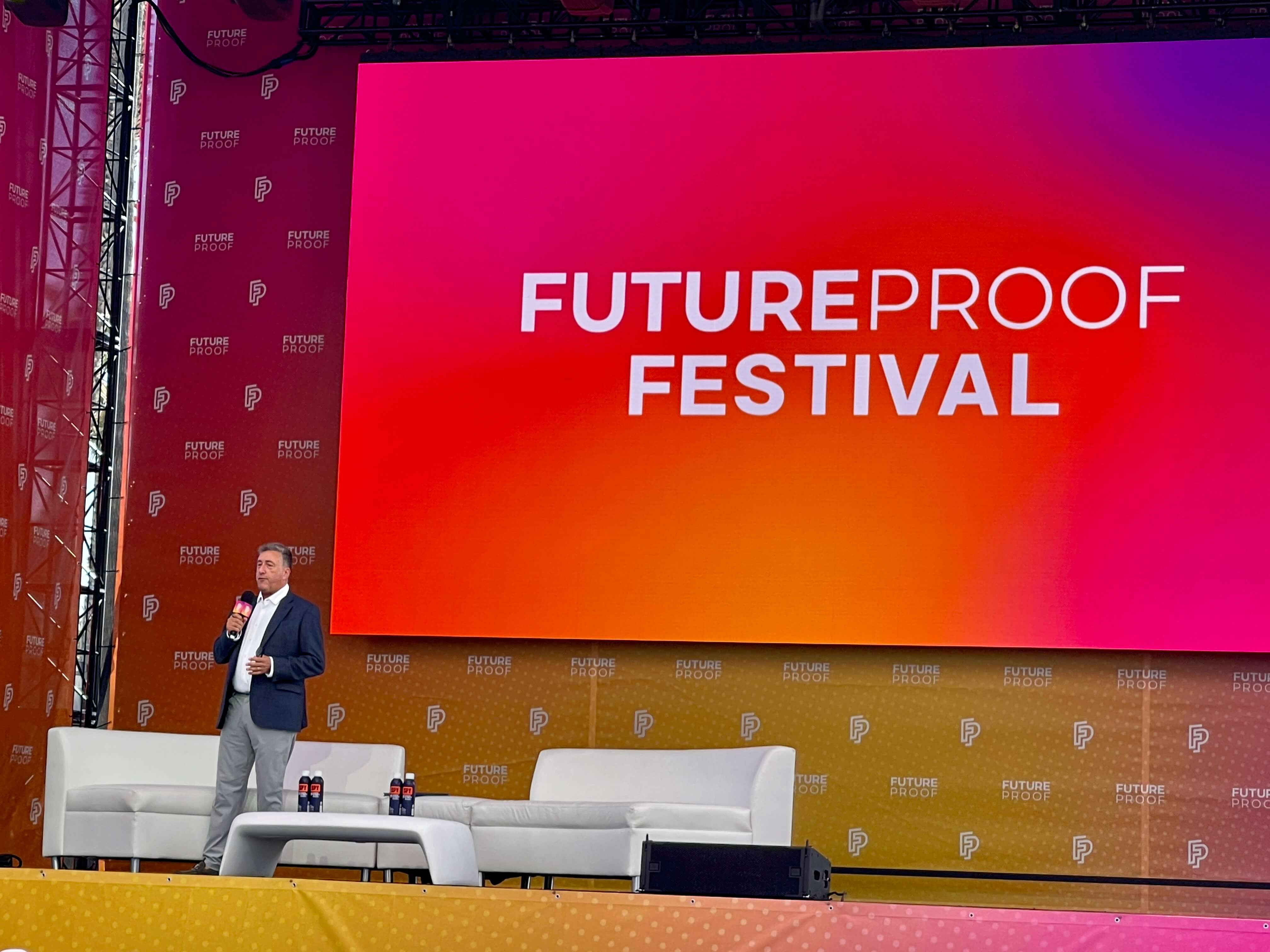
Barry Ritholtz @ Future Proof 2026 introducing David Booth of Dimensional Fund Advisors
Tax Planning Is Becoming a Bigger Part of Wealth Management
One of the most valuable sessions focused on tax management and how leading firms are helping clients improve after-tax outcomes.
For years, tax planning has often been viewed as something that happens near the end of the year. Increasingly, firms are treating it as an ongoing process.
The discussion covered everything from tax-loss harvesting and concentrated stock positions to business exits, portfolio transitions, and tax-efficient investment strategies.
The underlying point was simple.
Investment returns matter, but what ultimately matters even more is what you're able to keep.
For incorporated professionals, business owners, executives, and retirees, thoughtful tax planning can have a significant impact over time. Many opportunities simply disappear when tax conversations are left until year-end.
The conference reinforced my belief that investment management and tax planning should not exist in separate silos. The best outcomes often come from integrating the two.
The Next Generation Isn't Looking for More Information
Another session explored how younger investors are approaching money and investing.
There's a common perception that younger generations are only interested in apps, cryptocurrencies, and self-directed investing.
The research presented painted a different picture.
Younger investors are starting earlier and consuming financial information differently than previous generations. Many arrive having already listened to podcasts, watched YouTube videos, read blogs, or used AI tools to research financial topics.
But despite having access to an endless supply of information, they're still asking many of the same questions previous generations asked.
Am I saving enough? Am I investing correctly? Am I making smart financial decisions?
What they're often looking for is not more information. They're looking for confidence. They're looking for perspective. They're looking for someone who can help them separate good ideas from bad ones and connect financial decisions to long-term goals.
Information has become abundant. Wisdom remains valuable.

Chris Cherry, Alexandra Semenova, Doug Boneparth and Gary Foodim @ Future Proof 2026 Session: Winning the Next Generation of Clients
The Most Surprising Takeaway: In-Person Still Wins
One of the more surprising findings came from several sessions on advisor growth and client acquisition.
Despite the rise of virtual meetings, digital marketing, artificial intelligence, and online content, the data consistently pointed to one conclusion: in-person interactions remain incredibly powerful.
Personal introductions continue to drive new relationships. Face-to-face conversations continue to build trust faster than digital interactions. Educational events and seminars continue to outperform many virtual alternatives.
The reason isn't complicated. Financial planning is deeply personal.
People are making decisions about retirement, family, healthcare, business succession, inheritance, and life goals. These are not purely analytical decisions. They're emotional decisions with financial consequences.
As a result, relationships matter. In fact, several speakers argued that as AI-generated content floods the internet, authentic human connection will become more valuable, not less.
Technology can make us more efficient. It can help us prepare better. It can automate routine tasks that previously consumed hours of an advisor's day.
The best firms are using those efficiencies to spend more time with clients, not less. I suspect that's exactly where our profession is heading.
The Best Investors Still Focus on What They Can Control
One of the highlights of the conference was hearing David Booth, founder of Dimensional Fund Advisors, speak about investing and uncertainty. After decades in the industry, his message remains refreshingly simple.
Markets will always be uncertain.
The goal isn't to predict the future. The goal is to build a plan that can withstand it. Instead of trying to forecast interest rates, elections, recessions, or market headlines, investors are often better served by focusing on the things they can actually control:
- Diversification
- Asset allocation
- Costs
- Taxes
- Savings habits
- Long-term discipline
It's not a flashy message, but history suggests it's an effective one.
The investors who achieve the best long-term outcomes are rarely the ones making the best predictions. More often, they're the ones who remain disciplined when uncertainty inevitably shows up.
My Biggest Takeaway
When I boarded the plane to Future Proof, I expected to learn about technology.
What I came home thinking about was trust.
The industry is undoubtedly changing. AI will continue to improve. Technology will continue to evolve. New tools will reshape how advisors work behind the scenes.
But the strongest message from the conference wasn't about replacing people with technology. It was about using technology to become more human.
The most successful firms are using technology to reduce administrative work, improve efficiency, and create more time for meaningful conversations. They are investing more in relationships, not less.
Clients don't need another app or another source of information. They need someone who understands their goals, helps them avoid costly mistakes, provides perspective during uncertain times, and helps them make good decisions with confidence.
That's always been the foundation of good advice. If anything, it's becoming even more important.
- Harry
Have a question you'd like answered? Email me directly at harry.sale@raymondjames.ca or book a meeting with me at https://calendly.com/harry-sale
© 2026 Raymond James Ltd. All rights reserved.
Privacy | Advisor Website Disclaimers | Manage Cookie Preferences
Raymond James Ltd. is an indirect wholly-owned subsidiary of Raymond James Financial, Inc., regulated by the Canadian Investment Regulatory Organization (CIRO) and is a member of the Canadian Investor Protection Fund (CIPF).
Securities-related products and services are offered through Raymond James Ltd.
Insurance products and services are offered through Raymond James Financial Planning Ltd, which is not a member of the Canadian Investor Protection Fund (CIPF).
Raymond James Ltd.’s trust services are offered by Solus Trust Company (“STC”). STC is an affiliate of Raymond James Ltd. and offers trust services across Canada. STC is not regulated by CIRO and is not a Member of the Canadian Investor Protection Fund (CIPF).
Raymond James advisors are not tax advisors and we recommend that clients seek independent advice from a professional advisor on tax-related matters. Statistics and factual data and other information are from sources RJL believes to be reliable, but their accuracy cannot be guaranteed.
Use of the Raymond James Ltd. website is governed by the Web Use Agreement | Client Concerns.
© 2025 Raymond James Ltd. All rights reserved. Member IIROC / CIPF | Privacy Policy | Web Use Agreement